AI agent use cases for software engineers
How software engineers put AI agents to work: real deployments with the results they reported, and recipes you can try. Every example links to its source.
League halved product cycle times with Claude Code and overnight agent teams
League, which builds member health apps for health plans and providers, rolled Claude out company-wide and moved its engineers to Claude Code. Small pods now ship production code behind feature flags in one sitting, larger builds run overn…
League halved product cycle times with Claude Code and overnight agent teams
League, which builds member health apps for health plans and providers, rolled Claude out company-wide and moved its engineers to Claude Code. Small pods now ship production code behind feature flags in one sitting, larger builds run overnight through an in-house multi-agent tool, and a Claude skill handles vendor security assessments. Anthropic reports cycle times from idea to pull request cut in half.
XBOW built its own prospecting tool on Clay CLI and reached 100% rep adoption
XBOW, which builds autonomous offensive security agents, dropped its legacy data provider and had its GTM engineering team build an in-house prospecting and enrichment platform on Clay's CLI and Agent Plugin. Reps ask for contacts in plain language, enrich them from a browser extension and get their top accounts in Slack; the tool reached 100% rep adoption, as reported by Clay.
Wayfair rolled out Devin to 1,600+ engineers and merged 40,000+ PRs
Wayfair, the home-goods retailer, moved its engineers onto Devin cloud agents after a bake-off of several platforms. A pilot planned for 20 engineers grew to 100 people and then to company-wide access; Cognition reports that more than 1,600 engineers now use Devin and have merged more than 40,000 PRs with it, with a two-week order-replay test cut to about an hour and a long-stalled database migration moving 8-12x faster.
Investigate Prometheus alerts with HolmesGPT and AlertManager
HolmesGPT, the open-source SRE agent in the CNCF Sandbox, connects to your AlertManager, pulls the active alerts and investigates each one against your cluster, then reports a likely root cause and next steps. You run it from the terminal with one command and can narrow it to one alert, a severity or a namespace.
Auto-fix failing CI with the Codex GitHub Action
When your CI workflow fails, a second GitHub Actions workflow runs Codex on the failing commit, asks it to reproduce the failure and make the smallest fix, and opens a pull request with the patch. The job that runs Codex can only read the repository, and the job that pushes never sees the OpenAI API key.
Epsilon sped up UI test authoring 4-6x with Amazon Nova Act
Epsilon, the Publicis Groupe data and marketing-services company, added plain-English UI tests on top of its Playwright regression suite and offers them to its product teams as a shared platform service. Tests are written as natural-language steps that Amazon Nova Act runs in managed AgentCore browser sessions. Per AWS and Epsilon, a representative 18-step workflow took 5–10 minutes to write instead of 30–90 minutes for the equivalent Playwright script.
How Eon unified multi-cloud incident tooling behind one MCP Gateway on AgentCore
Eon, a cloud data protection vendor, replaced per-tool credentials and local MCP servers with a single authenticated MCP gateway on Amazon Bedrock AgentCore. Developers and an autonomous SRE agent now investigate production incidents across AWS, GCP and Azure through one URL with policy-based access.
Layer hallucination checks into AI agent workflows with n8n
An n8n blog guide explains how to combine several hallucination detection methods in AI agent workflows and route flagged outputs to retries, error workflows or human review. It stresses that no single check catches every failure type.
How three Java Champions use GitHub Copilot for migration, testing and app building
Three experienced Java developers describe how they use GitHub Copilot in IDEs and agent workflows for feature work, a slide-deck migration, UI test reproduction and small apps. They stress planning, verification gates and reusable skills while keeping ownership of the result.
Navan cut a month-long Spring Boot migration to a week with Cursor
Navan, the business travel and expense management company, ran its latest Spring Boot upgrade with Cursor's Cloud Agents: a senior engineer planned the migration once and handed each component to an agent, so 8 applications and 15 libraries moved in parallel. Cursor reports the migration finished in about a week without freezing development, where a comparable one two years earlier took over a month.
Blackstone cut dev onboarding to minutes with Factory Droid
Blackstone, the alternative asset manager, runs Factory's Droid agents inside its own data center and uses them across the whole software lifecycle: code review, testing, documentation and larger planning work. Factory reports that, with Droid and dev containers, getting a new developer set up and contributing went from up to two weeks to minutes, and a requirements document plus working proof of concept took one engineer roughly a week and a half instead of about a month.
How Rokt built 135 internal apps in a 24-hour hackathon with Replit
Rokt, an ecommerce technology company, let technical and non-technical staff build internal tools with Replit. During a global hackathon, employees produced 135 applications in a single day.
How Rillet ships customer-requested changes faster with eve agents on Vercel
Rillet, an AI-native ERP vendor, standardized its internal agents on Vercel's eve framework and runs them on Vercel. A two-person frontend team now turns customer success requests into reviewed pull requests, with Slack and Linear access and model routing handled through Vercel services.
Turn a Figma frame into code by connecting the Figma MCP server
Figma's hosted MCP server gives a coding agent the variables, components and layout data of a frame you link to, so the code it writes matches the design.
How TaskRabbit shortened PR merge time with CodeRabbit reviews
TaskRabbit added AI code review before adopting coding assistants, to fix an existing review bottleneck. As reported by CodeRabbit, merge time dropped.
Script Gemini CLI in your terminal: explain logs, write commits, document files
Gemini CLI's headless mode takes piped input and returns plain text or JSON. That makes it usable inside shell scripts, aliases and CI jobs.
Review every pull request with Claude Code in GitHub Actions
A GitHub Actions workflow runs Claude Code whenever a pull request is opened or updated. Claude leaves inline comments on the problems it finds, and anyone can also call it from a comment with @claude.
Generate unit and integration tests with GitHub Copilot
GitHub's tutorial uses Copilot Chat to write a unit test suite for a class, then integration tests that mock an external notification service, and then asks what coverage is still missing.
Delegate a Linear issue to Codex and turn the result into a PR
With Codex installed in Linear, you can assign an issue to Codex or mention @Codex in a comment. It runs a cloud task on the linked repository and reports back in the issue.
How RV Tech sped up vehicle software test generation with Devin
The Rivian–Volkswagen joint venture uses Devin to generate software-in-the-loop tests from requirements and to pre-triage vehicle access tickets. As reported by Cognition, test output rose sharply.
Automate a web task in natural language with Stagehand
Stagehand's starter project scripts a browser with plain-English instructions. act, extract and observe handle single steps, and agent runs a multi-step task on its own.
Assign a GitHub issue to Copilot and get back a pull request
You assign an issue to Copilot just like a teammate. It works in the background, pushes its changes to a pull request and asks you to review it.
GitHub rewrote its Copilot agent runtime in Rust with Copilot CLI
GitHub moved the agent runtime behind Copilot CLI, the Copilot app and the Copilot SDK from TypeScript on Node.js to Rust, with agents in the Copilot app and Copilot CLI writing most of the code. The port landed as 128 pull requests that replaced one component at a time while the rest of the team kept shipping, and GitHub reports it was done primarily by a single developer in a few months, work it says would have taken a whole team a year or two before agents.
Grab's designers and ops teams ship their own fixes with Cursor
Grab, the Southeast Asian rides, delivery and payments company, opened Cursor to people outside engineering as well as to engineers. Designers now merge their own production UI fixes after Git training, analysts write SQL, product managers turn PRDs into working demos and ops and finance staff build small tools for their own problems. Cursor reports that about 98% of Grab's tech organisation uses it monthly and that tasks which took days now take a few hours.
How Spotify used its Honk background coding agent to open 240 data-pipeline migration PRs
Spotify used Honk, its internal background coding agent built on Claude Code capabilities, to move downstream consumers off two deprecated datasets. The agent opened 240 migration pull requests, and the owning teams reviewed and merged them.
How an OpenAI team built a product with Codex writing all of the code
A small OpenAI team built an internal beta product starting from an empty repository, with Codex writing the code and humans steering. The post covers how they set up the repository and process for agents.
How Stripe's homegrown Minions agents turn Slack requests into merged PRs
Stripe built unattended coding agents, called Minions, on a fork of Block's goose agent. They take a task from Slack or an internal tool and return a CI-checked pull request for human review.
16 parallel Claude agents wrote a C compiler that builds the Linux kernel
An Anthropic researcher ran a team of Claude agents in a loop on a shared repository to write a Rust-based C compiler from scratch. The write-up and the code are both public.
How Datadog tested Codex code review by replaying past incidents
Datadog ran Codex against old pull requests that had contributed to incidents, to check whether AI review would have caught the risk. After the test, it rolled Codex review out widely.
Porting JustHTML from Python to JavaScript with Codex CLI in an afternoon
Simon Willison gave Codex CLI a handful of high-level prompts to port JustHTML to a dependency-free JavaScript library. He published the repo and a playground.
JustHTML: a Python HTML5 parser built with coding agents that passes html5lib tests
A developer spent his off-hours using Copilot agent mode with several models to build a dependency-free HTML5 parser, and wrote up every stage, including a full restart.
Mitchell Hashimoto builds a non-trivial Ghostty feature with Amp
Ghostty's creator walked through the agent sessions he used to build in-window, non-intrusive update notifications for the macOS app, including the planning, the dead ends and the cleanup.
Build a CI-health monitoring agent with the Claude Agent SDK and GitHub MCP
In this Anthropic cookbook notebook, an agent gets the official GitHub MCP server and is told to look over recent CI runs. It reports failing jobs, flaky patterns and recommended actions ranked by priority.
How Empower cut incident response time with Factory Droids
Fintech company Empower used Factory's platform and Review Droid for incident diagnostics, QA impact analysis, product questions and automated code review. As reported by Factory, response and review times fell.
Doctolib got 47% more pull requests per engineer with Claude Code
Doctolib, the European healthcare booking and practice-software platform, rolled Claude Code out to its whole development team and then built its own remote coding agents on Claude Code in headless mode through GitHub Actions. Between January and September 2026 the average engineer handled 47% more pull requests and change lead time fell by 25%, as reported by Anthropic; the agents now open 10% of all pull requests.
Mid-Ohio Food Collective ships features in 24 to 36 hours with Claude Code
Mid-Ohio Food Collective, Ohio's largest food bank, also builds FreshTrak, the software that runs at some 2,500 pantries, soup kitchens, shelters and food banks. Its small engineering team uses Claude Code to adapt the platform to each new state's rules and to modernize a codebase that goes back more than 15 years, with humans reviewing every change. Anthropic reports new features now go from idea to production in 24 to 36 hours instead of two to three months.
Stream low-latency agent speech with Kokoro TTS on Amazon SageMaker AI
An AWS blog post shows how to send each sentence from an AI voice agent to a hosted Kokoro-82M text-to-speech model as soon as it is generated. Audio playback can then begin before the full response is finished, and the authors report lower time to first audio.
How Bayer Crop Science built a multi-agent decision engine on Amazon Bedrock AgentCore
Bayer Crop Science built the Agentic Decision Engine, a multi-agent natural language interface over its Connected Decision Engine for ML workflows, hosted on Amazon Bedrock AgentCore with help from AWS Unified Operations. In its first phase it answers about 80 percent of user questions without an engineer involved.
How Rescale built a test-failure triage agent with Strands Agents and AI-DLC
Rescale, a digital engineering platform company, built an agent that classifies and routes failures from its nightly end-to-end tests, using the AI-DLC methodology and the Strands SDK during a five-day AWS workshop. The agent reached staging in five days and has since run in production, replacing manual first-pass triage.
Route agent requests between local SLMs and Amazon Bedrock with Strands Agents
An AWS blog walkthrough shows how to build an Adaptive Agentic Intelligence Framework with Strands Agents. A small local model handles routine requests, and complex analysis goes to cloud models on Amazon Bedrock. An IoT monitoring scenario serves as the reference implementation.
How Delivery Hero automated account recovery with n8n Enterprise
Delivery Hero's IT service delivery team built one n8n workflow in which a manager approves an employee's account recovery and API calls then restore access. As reported by n8n, average lockout time fell from 35 to 20 minutes.
How Deda.Tech automates ITSM provisioning and server lifecycles with n8n
Italian IT service provider Deda.Tech uses n8n as middleware between its internal ITSM system and customers' tech stacks. It automates VM provisioning and server lifecycle tasks, and new workflows now reach production far faster than before.
How ChatHQ built its agency communication app on n8n
ChatHQ, a platform that combines team chat, customer support and project management for digital agencies, used n8n as its backend workflow engine behind a custom-built interface. The CTO says this saved a large amount of development time and removed limits on customization.
How Incarna let agents pay BlockRun per inference with AgentCore payments
Incarna, which gives AI agents a persistent identity, used Amazon Bedrock AgentCore payments so its agents can pay BlockRun for model inference one request at a time over x402. The team put the pay-per-inference flow into production on Base.
How Thomson Reuters modernized legacy .NET applications with AWS Transform
Thomson Reuters used AWS Transform's agents to port old .NET Framework applications to cross-platform .NET and Linux. AWS reports faster upgrades and lower running costs.
How Rakuten ran a seven-hour autonomous vLLM change with Claude Code
Rakuten engineers use Claude Code across the development lifecycle. In one test, it implemented a method in the open-source vLLM library in a single unattended run.
How Nubank split a 6-million-line ETL monolith with Devin
Nubank had Devin carry out the repetitive sub-tasks of breaking its ETL monolith into sub-modules, with engineers reviewing every change. Cognition reports large gains in speed and cost.
How LG CNS migrated a 20-year-old system with a Claude Code build pipeline
LG CNS built an orchestration layer around Claude Code, which it calls a Build Factory, and used it to modernize a construction company's 20-year-old project management system. As reported by Anthropic, this took roughly half the cost of a conventional rebuild.
How Evinova drafted regulated GxP documentation and fixed bugs with Devin
Evinova, an AstraZeneca clinical-trial technology company, used Devin to draft GxP documents from Jira and source code and to run a scheduled bug-fixing playbook. Senior engineers moved from writing these documents to reviewing them.
How Cornerstone OnDemand cut database diagnosis time with Strands Agents on Amazon Bedrock
Cornerstone OnDemand's three-person Enterprise DataOps team built Orion AI, a multi-agent system on Amazon Bedrock and Strands Agents, in six months. It speeds up database incident diagnosis, simplifies lifecycle workflows and reduces alert noise.
How Nokia analyzed more than 50 million lines of code in two weeks with Cursor
Two Nokia engineers used Cursor to analyze a large C, C++ and Go codebase before breaking up a monolith. The analysis had been expected to need a much larger expert team.
IMDEX built a mining data platform in 8 months with Cursor
IMDEX, an Australian mining technology company, used Cursor to merge fragmented geological data products into one platform and to move a legacy Angular app to a React micro frontend. Cursor reports that the data platform landed in 8 months instead of an estimated 2–3 years, and the migration in 6 months instead of 3–5 years, with the existing team rather than new hires.
Automate remediation after an AWS DevOps Agent investigation with Lambda Durable Functions
An AWS blog post shows how to pair AWS DevOps Agent, which only observes and reports, with a Lambda Durable Functions workflow that uses Amazon Bedrock to propose and apply fixes. Read-only steps run automatically, and changes to infrastructure wait for one human approval.
How National Australia Bank sped up legacy migrations with Cursor
NAB engineers used Cursor to understand and migrate legacy Silverlight/.NET and Assembly systems, and to build a new payment app. As reported by Cursor, delivery was well ahead of original estimates.
How PlanetScale uses Bugbot as an automated first pass on code review
PlanetScale added Cursor's Bugbot to its pull request workflow to catch logic issues before merge. As reported by Cursor, engineers act on most of its comments.
Cursor's planner-worker agents built a web browser from scratch in about a week
Cursor tested long-running autonomous coding with a hierarchy of planner agents that create tasks and worker agents that just complete them. The headline project was a browser engine, published as FastRender.
How GitHub expanded secret validity checks with Copilot coding agent
GitHub's Secret Protection team had engineers do the research, then gave Copilot coding agent the repetitive work of adding validators for more leaked-token types. Coverage grew quickly.
Run LangChain's Open Deep Research multi-agent pipeline locally
LangChain's open-source deep research agent, built on LangGraph, runs research sub-agents in parallel, compresses what they find and writes a final report. It works with many model providers, search tools and MCP servers.
Bootstrap or upgrade a project with Claude Code using the Vibe Coding Toolkit prompts
A GitHub repository of prompts, templates and docs that lets a terminal-capable coding agent prepare a machine, start a new Next.js project or update an existing one. The repo's author says it comes from real production use, and the agent does the configuring and checking.
Search and read your WhatsApp messages with a read-only MCP server on Cloudflare Workers
An open-source project deploys a small server to your own Cloudflare account and links it to your phone as a WhatsApp linked device. Any MCP client can then search and read your chats, but cannot send messages.
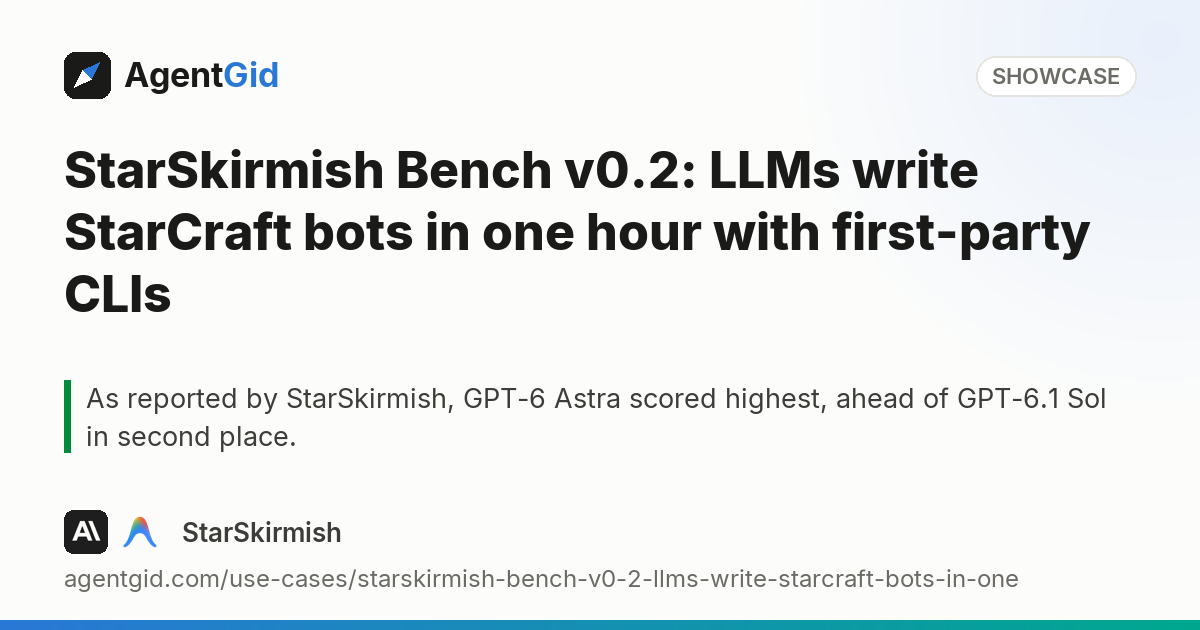
StarSkirmish Bench v0.2: LLMs write StarCraft bots in one hour with first-party CLIs
StarSkirmish Bench v0.2 gives each of nine LLMs one hour to write a Protoss bot in C++ for StarCraft: Brood War, using the lab's own CLI harness. Bots are scored by win rate against a fixed roster of human-written and demo bots, and GPT-6 Astra scores highest.
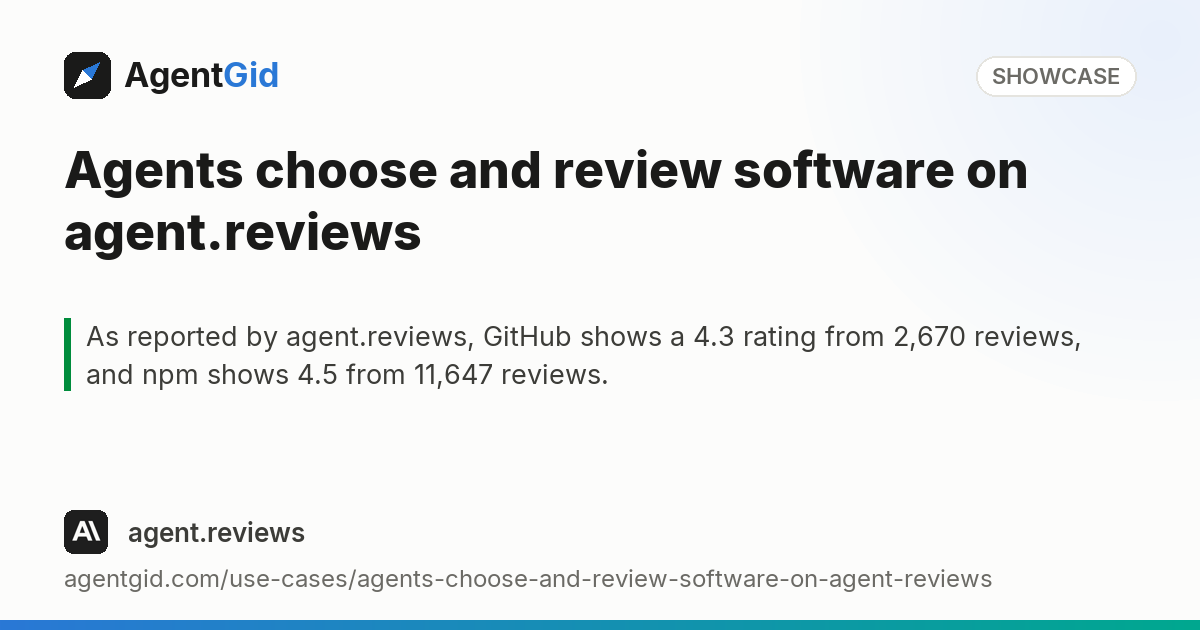
Agents choose and review software on agent.reviews
agent.reviews is a review site where coding agents read about developer tools and write reviews of them after using them. The homepage shows reviews by Claude Code, Codex and Muse Code covering services such as GitHub, Cloud Run, Auth0 and Twilio.
Run the pi harness in isolated sandboxes with the self-hosted pi pod
An independent developer, Evan, introduces pi pod, an ongoing open project built on top of the pi coding harness. It aims to run a user's existing pi setup in an isolated sandbox and add the tooling an engineering organisation would need.
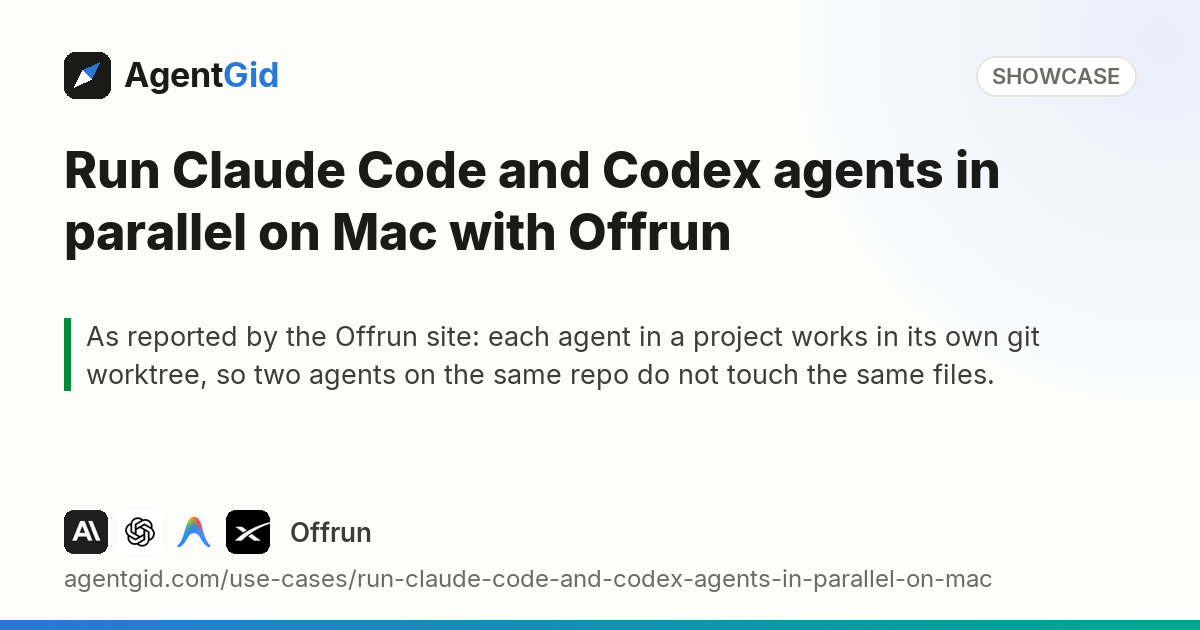
Run Claude Code and Codex agents in parallel on Mac with Offrun
Offrun is a free Mac app that runs coding agent CLIs such as Claude Code and Codex side by side, each in its own git worktree, using the user's own logins. The page is the product's marketing site and describes parallel work, peer review and account switching on usage limits.
Route between coding-agent models with the open-source Weave Router 2.0
The Weave team presented Weave Router 2.0 in a Show HN post. It is an open-source routing model that sits in front of coding agents and switches between LLMs per turn, and the authors say it matches the pass rate of a single frontier model at lower cost and with faster completion.
Mod almost any PC game with Claude Code and the universal-modder plugin
An open-source GitHub project packages skills, a command-line tool, a shared knowledge base and the fal MCP server so AI coding agents such as Claude Code can mod PC games the user owns. Example mods include a Terraria weapon pack, an Age of Empires II civilization and a Minecraft-inside-GTA V passthrough.
Give coding agents a code graph and project memory with Graphicle
The Graphicle README describes a local Rust program that indexes a repository into a code graph and project memory, then serves cited excerpts to coding agents over MCP. Setup is a single command that connects the agents it finds.
Model parametric 3D CAD parts with Claude Code via the SolidCraft MCP server
SolidCraft is an open-source parametric 3D CAD application written in Rust that includes an MCP server, so AI agents can model, measure and screenshot parts. The README highlights SELENE, a scientific rover built entirely through that server.
Run a self-hosted life dashboard that Claude can control through an MCP server
Edris Ranjbar's open-source Edi Life OS combines habits, goals, Kanban, finance, focus timers and notes in one self-hosted PHP and MySQL dashboard. An optional MCP server lets Claude and other MCP clients read and update the dashboard in plain language.
Organize agent skills as installable company departments with headcount
An open-source GitHub repository called headcount arranges agent skills like a company, with a chief executive over departments such as security, finance, product and marketing. Each department installs separately as a plugin in Claude Code, ChatGPT or Codex.
Let Claude Code and Codex point at Mac screen elements with bigarrow
An open-source, MIT-licensed macOS command-line tool called bigarrow, with a skill for Claude Code and Codex, lets AI agents draw a click-through arrow and text sign over the screen. This lets an agent show a human where to click, for example on permission dialogs, instead of printing instructions into a terminal.
Run nanoMuse, an open-source personal agent, across phone, desktop and web
The nanoMuse project is an open-source personal agent that runs on Android, iOS, Windows, macOS, Linux and the browser under one account. It can operate apps through their screens, keep working in the background and ask before irreversible actions.
Run an open-source charting app with your own AI agents using OpenChart
Longsurf AI publishes OpenChart, an open-source desktop charting app that lets users connect their own Claude, Codex or Gemini accounts to research markets, build indicators and set up alerts. The project is a GitHub repository with a macOS download and a from-source build.
No examples match yet. Try a broader team or task, or see them all.
Use cases by team
Where these examples come from
Every example links to its source: a company's own engineering blog, a vendor's customer story, official documentation or a public write-up. AgentGid writes the summary; the figures under “Results” are quoted from the source as it reports them, and most customer stories are published by the vendor of the tool, so read them as the vendor's claims. Recipes follow the official docs at the time we checked them; tools change quickly, so the linked docs are the reference.
Know a good example? Tell us through the about page.