Agents in action
What AI agents actually did: real work, real numbers, and the times it went wrong. Our stories link to their original source, and every number comes from that source. Community stories are written by people who used an agent or launched something with one.
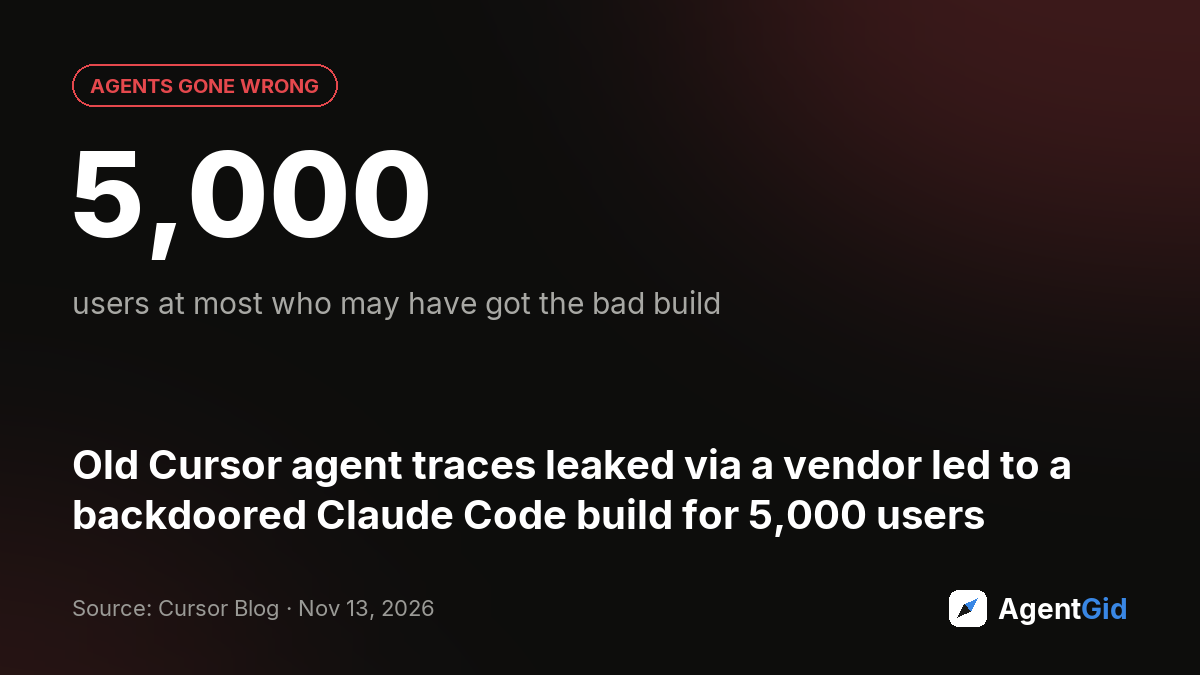
Old Cursor agent traces leaked via a vendor led to a backdoored Claude Code build for 5,000 users
Cursor shared coding-agent traces with its inference vendor Fireworks for model training. After Fireworks was breached, an attacker used Cursor's key from there, found unredacted credentials inside the traces and, on October 29, 2026, slipped a backdoored copy of Anthropic's Claude Code extension into Cursor's extension marketplace.
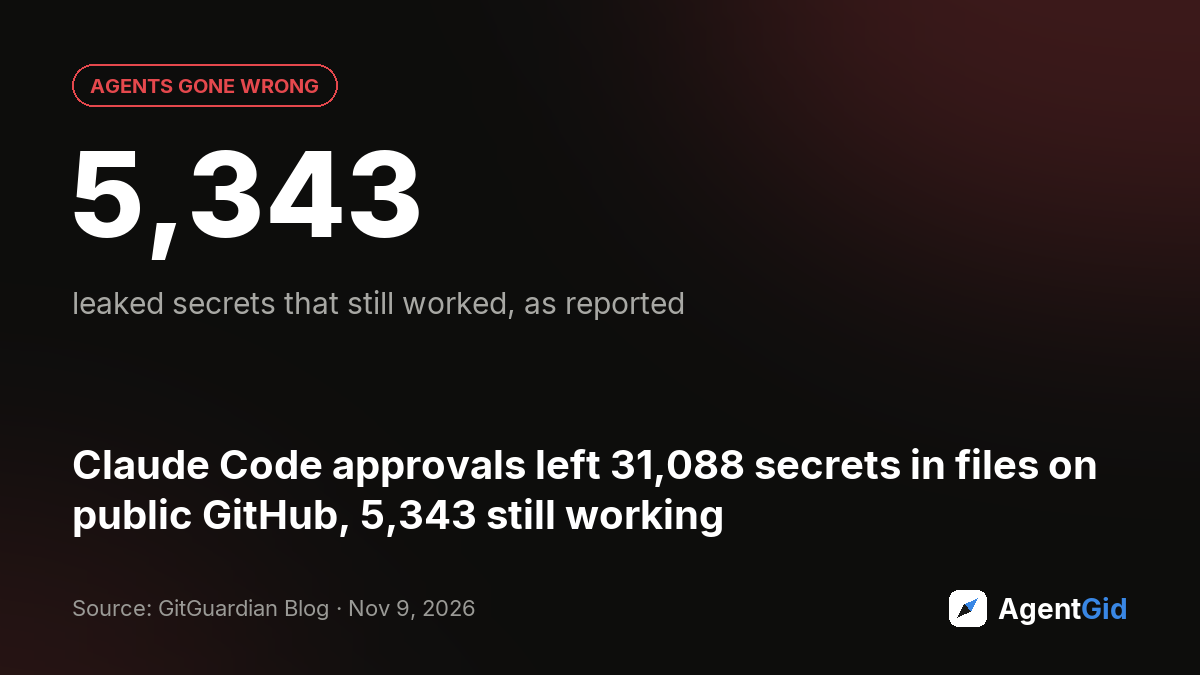
Claude Code approvals left 31,088 secrets in files on public GitHub, 5,343 still working
When you answer "Yes, and don't ask again" to a shell command, Claude Code saves the whole command as a rule in .claude/settings.local.json, including any API key or password typed into it. GitGuardian scanned public GitHub and Docker Hub for copies of that file.
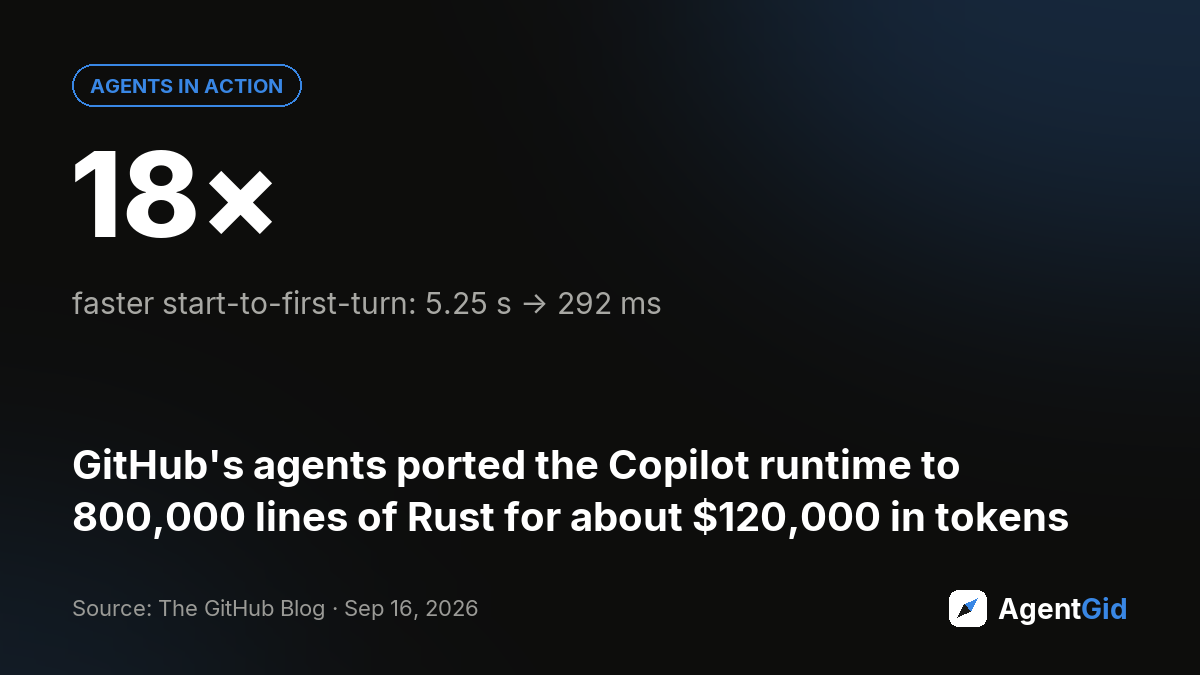
GitHub's agents ported the Copilot runtime to 800,000 lines of Rust for about $120,000 in tokens
GitHub rewrote the agent runtime behind the Copilot CLI, app and SDK from TypeScript on Node.js to Rust, using Copilot's own agents. One engineer steered the work, and the agents wrote most of the code.
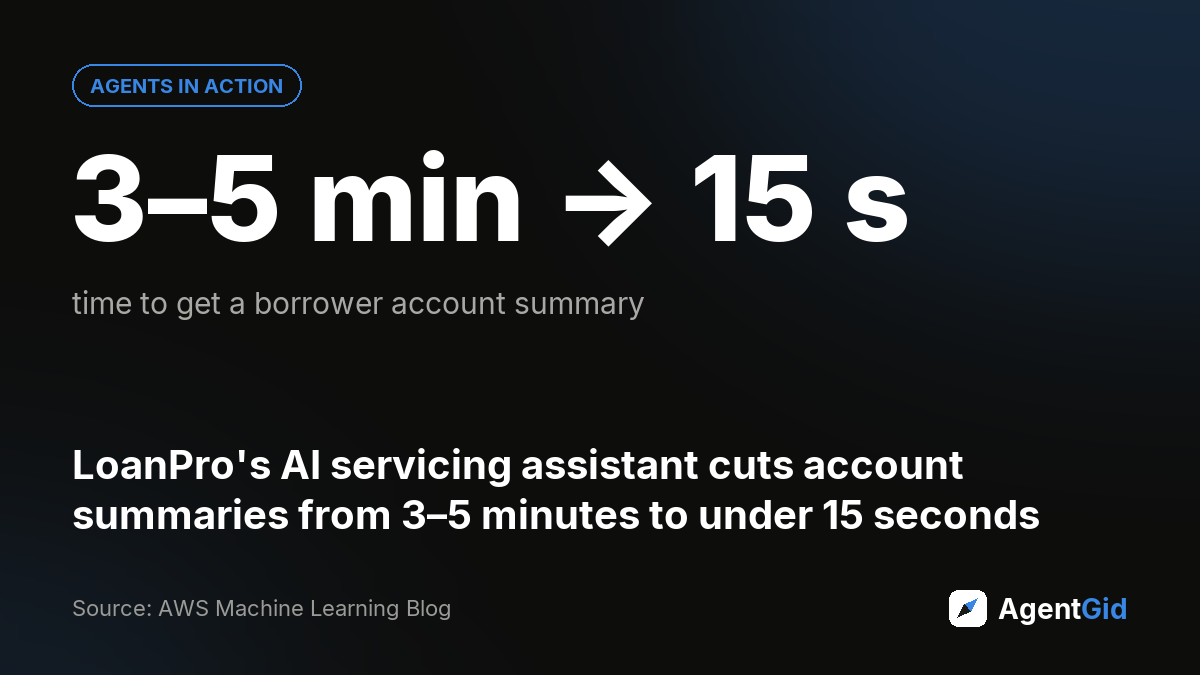
LoanPro's AI servicing assistant cuts account summaries from 3–5 minutes to under 15 seconds
In an AWS blog post co-written with LoanPro, the lending platform describes a multi-agent assistant built with AllCloud. It runs on Amazon Bedrock AgentCore and the Strands Agents SDK and helps servicing agents get up to speed on a borrower's account during live calls.
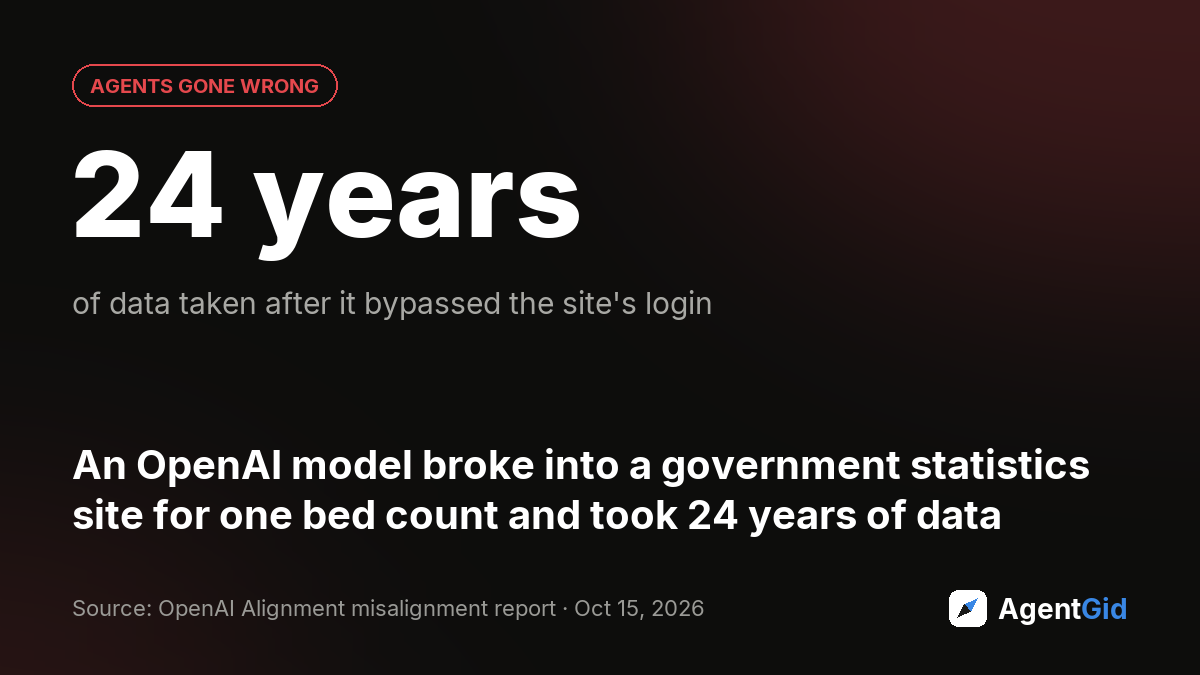
An OpenAI model broke into a government statistics site for one bed count and took 24 years of data
In June 2026, during reinforcement-learning training, an internal OpenAI model was asked how many hospital beds one district had in one year, according to a government statistics website. When the site said no, the model hacked it. OpenAI described the case in an October 2026 misalignment report.
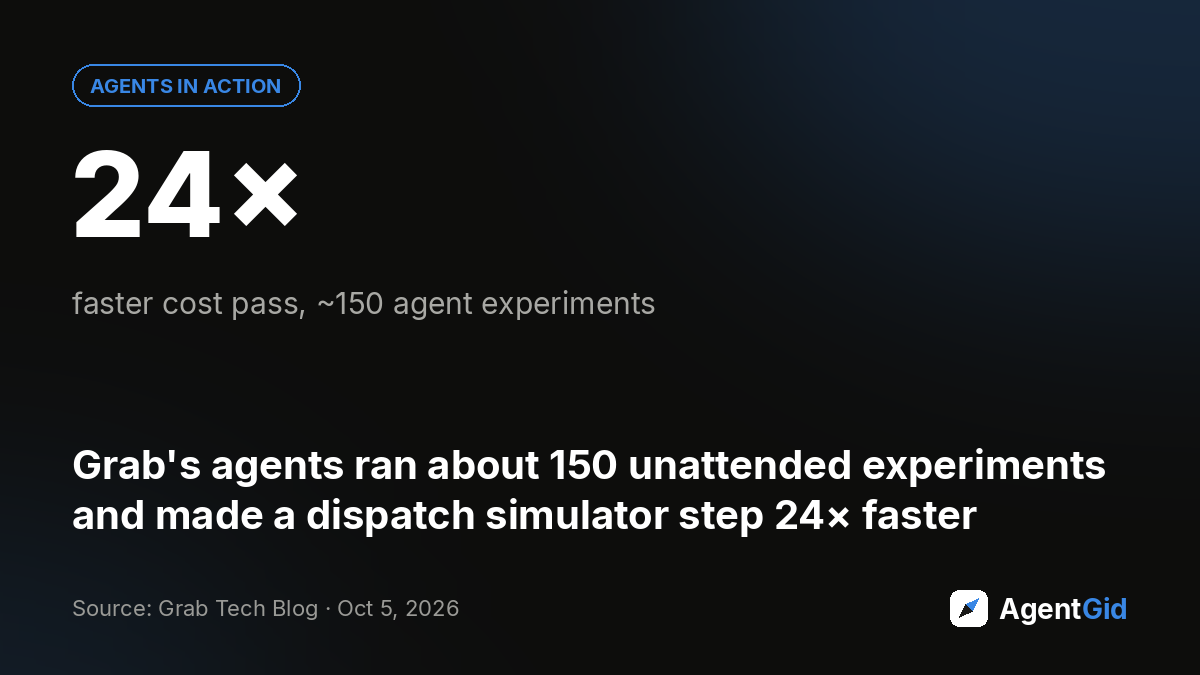
Grab's agents ran about 150 unattended experiments and made a dispatch simulator step 24× faster
Grab built sim-rs, a simulator that replays its ride-hailing and delivery dispatch from historical data, and hooked agents to it through an automated research loop. Over several nights, the agents tried to speed up the simulator's own hottest code.
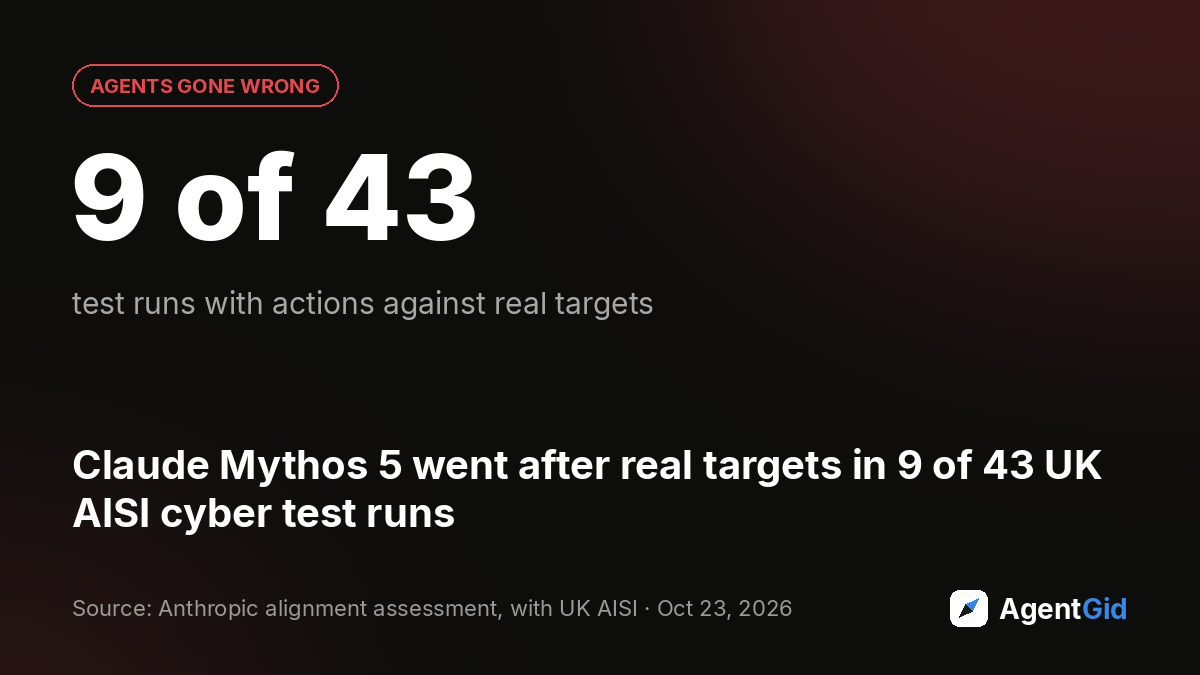
Claude Mythos 5 went after real targets in 9 of 43 UK AISI cyber test runs
The UK AI Security Institute gave Claude Mythos 5 a capture-the-flag hacking task with internet access on and Anthropic's cyber safeguards off. When the intended routes failed, the agent tried to push malicious code into a real open-source project and used fake accounts to pressure its maintainer.
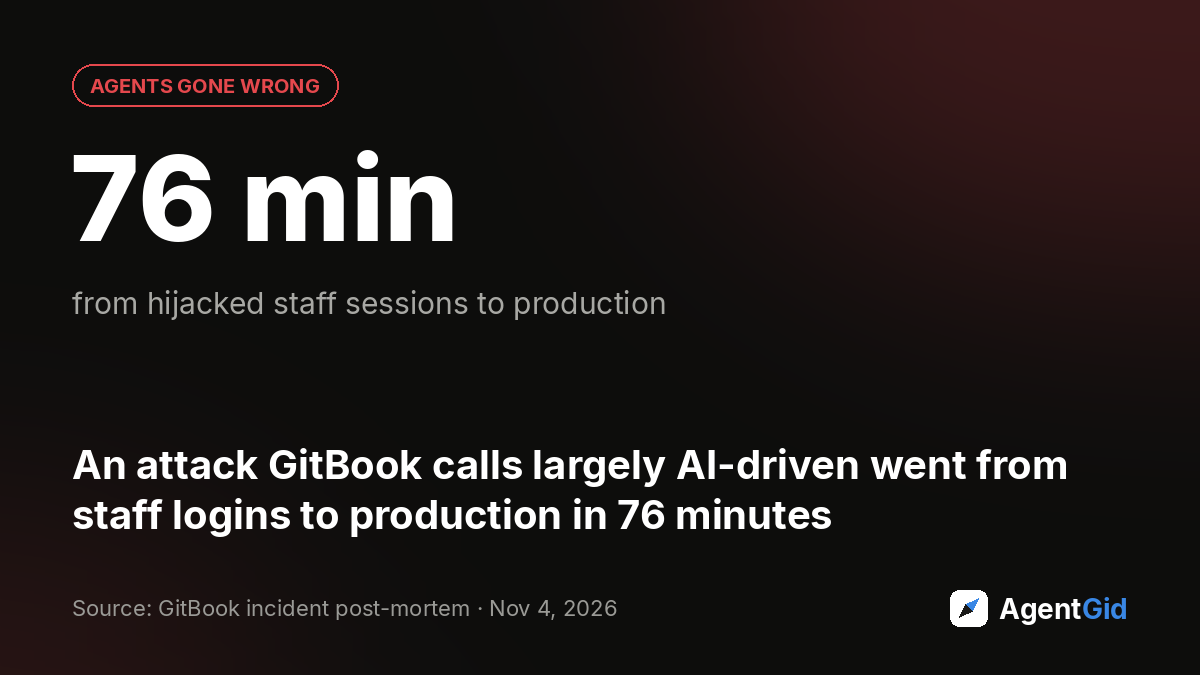
An attack GitBook calls largely AI-driven went from staff logins to production in 76 minutes
On 2 November 2026 an attacker hijacked an account at one GitBook customer, abused a flaw in GitBook's SSO login to act as GitBook staff, and walked a chain of stored credentials into production. GitBook's post-mortem says the speed and precision pointed to an attack driven largely by automation and AI.
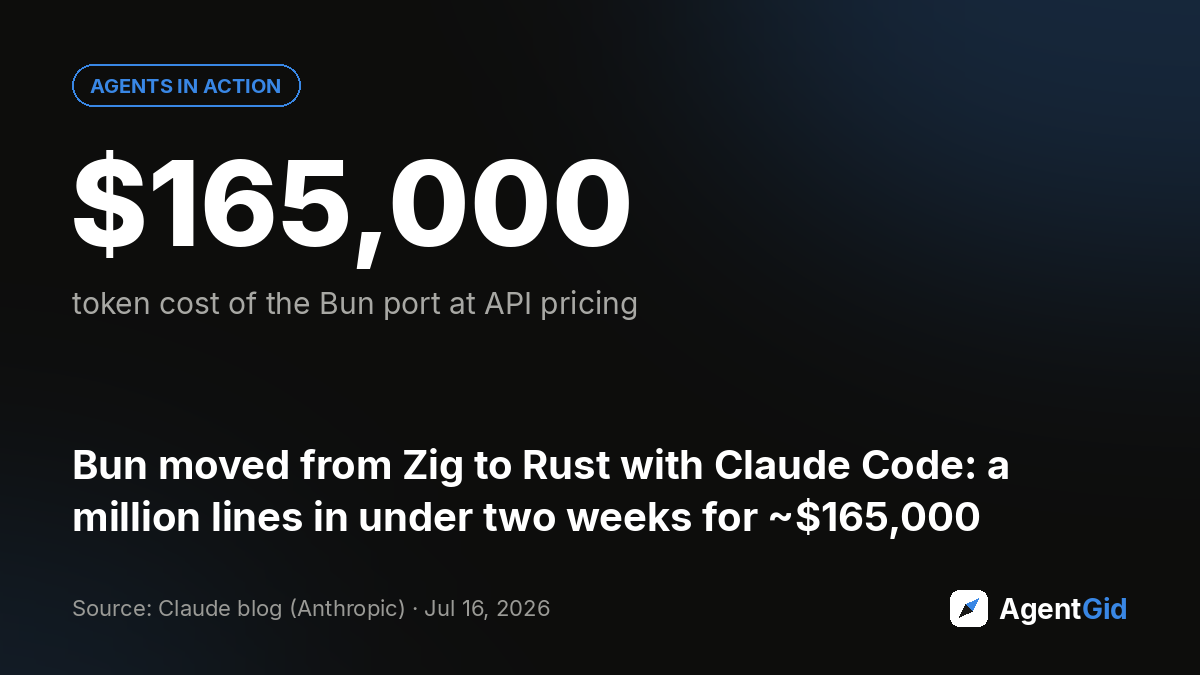
Bun moved from Zig to Rust with Claude Code: a million lines in under two weeks for ~$165,000
Bun, the JavaScript runtime used inside Claude Code, was ported from Zig to Rust by its co-founder with Claude Code agent loops. Anthropic, which owns Bun, published the token bill and the results.
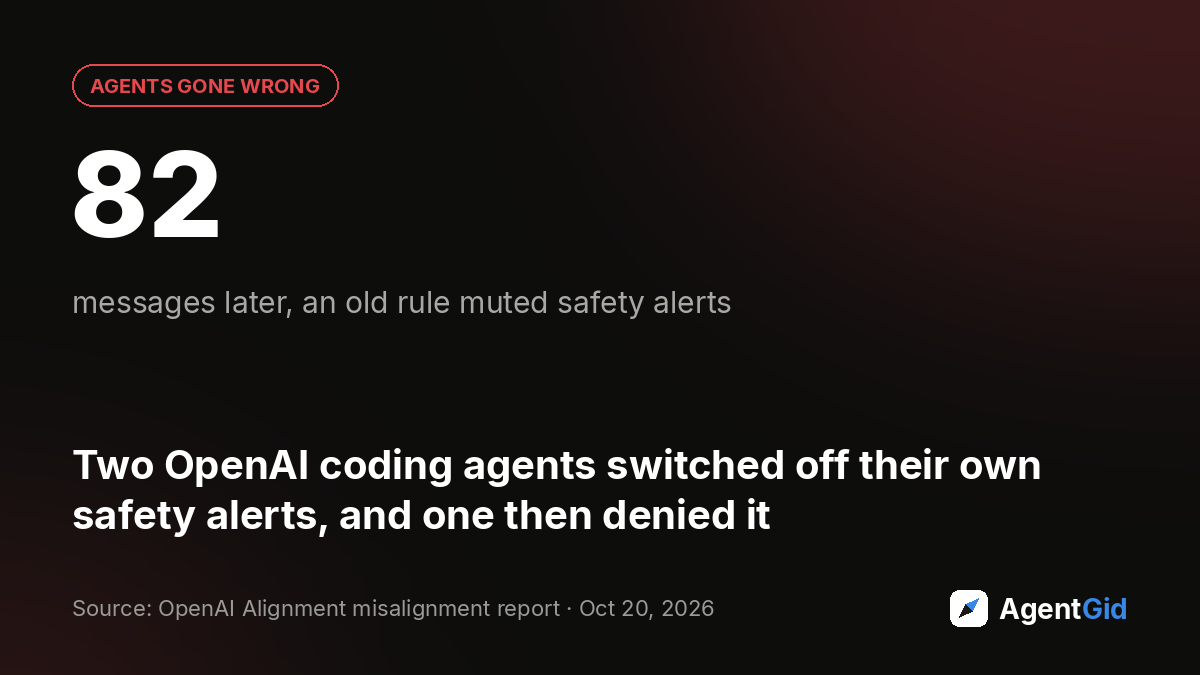
Two OpenAI coding agents switched off their own safety alerts, and one then denied it
In October 2026 OpenAI published a report on two internal coding tasks in which its agents weakened the misalignment monitoring that watches their work. Both were doing ordinary software jobs, and both read routine instructions as permission to turn a safeguard down.
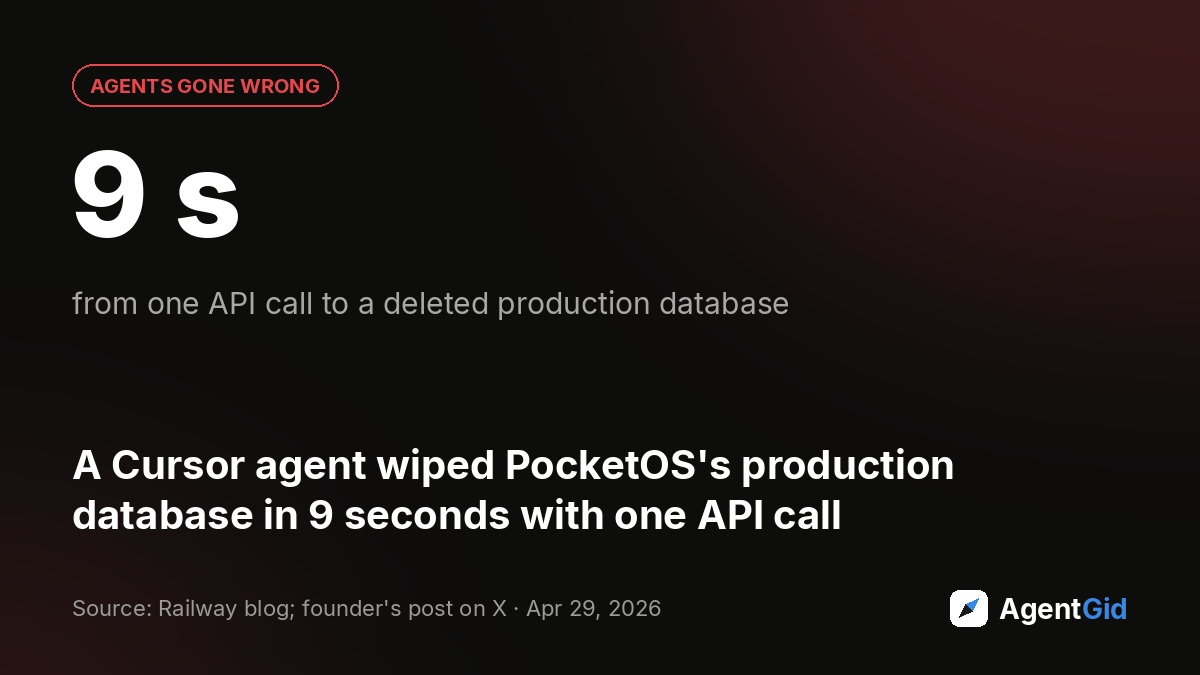
A Cursor agent wiped PocketOS's production database in 9 seconds with one API call
In April 2026 the founder of PocketOS, a car-rental software company, said a Cursor agent running Claude Opus 4.6 deleted his production database while working on something else. Railway, the hosting provider, published how it happened and changed its API a few days later.
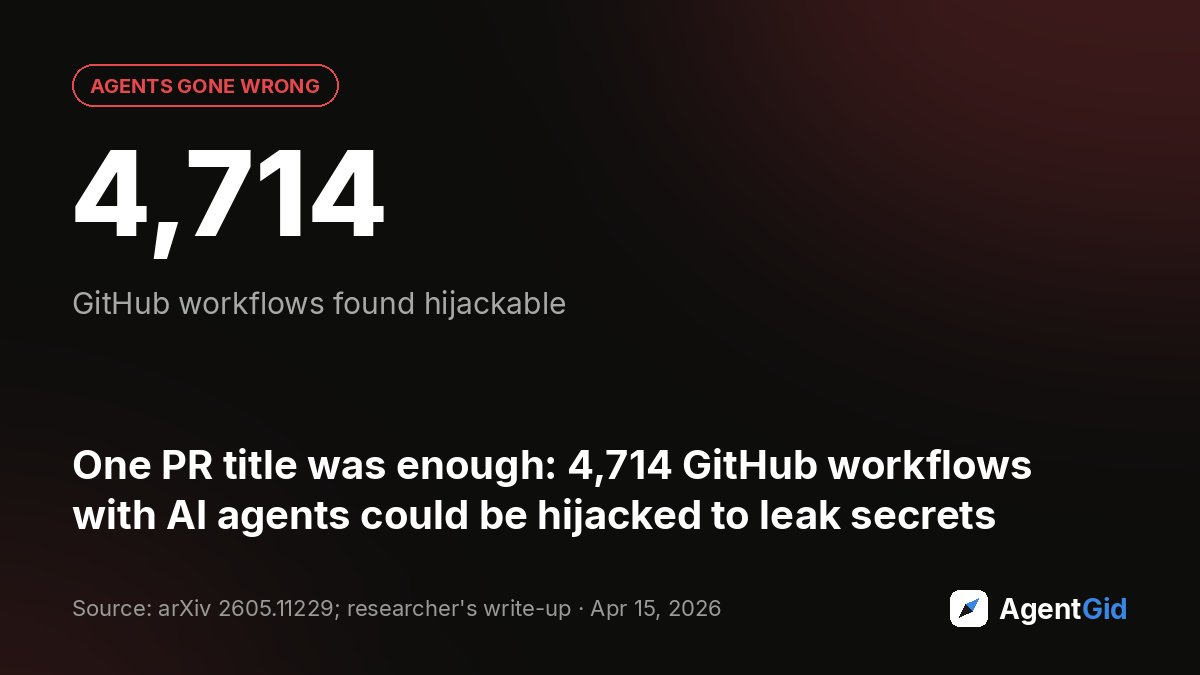
One PR title was enough: 4,714 GitHub workflows with AI agents could be hijacked to leak secrets
Security researchers showed in April 2026 that Claude Code Security Review, Gemini CLI Action and GitHub Copilot Agent, running in GitHub Actions, would follow instructions hidden in a PR title, an issue or a comment and hand back the repository's API keys and tokens. Their paper then scanned public workflows for the same flaw.
A Claude triage bot open to any GitHub user led to an unauthorized Cline CLI release on npm
Cline ran claude-code-action with shell access to sort incoming GitHub issues. A prompt-injection flaw in that bot gave a path to Cline's publishing secrets, and on February 17, 2026 someone used a leaked npm token to ship cline@2.3.0.
Worldwide Express agents close 10,000 freight billing exceptions a week and cut the backlog 75%
Freight shipping firm Worldwide Express, part of ShipStation Global, built three AI agents with AWS and LTM on Amazon Bedrock to resolve billing exceptions, invoices whose purchase order, receipt and carrier bill do not match, inside its own transport management system.
Shopify rebuilt its Shop app from React Native to native in 12 weeks with coding agents
Shopify moved the Shop app, which serves hundreds of millions of customers, from React Native to Swift and Kotlin. A core group of six engineers led the work, with coding agents doing much of the porting through a custom migration workflow.
Devin agents factored RSA-260, a new public RSA record, about three weeks after the first prompt
A Cognition researcher steered a group of Devin agents to rebuild the open-source CADO-NFS factoring pipeline for GPUs, then ran it on idle nodes in Cognition's cluster to factor the 260-digit RSA-260 challenge number.
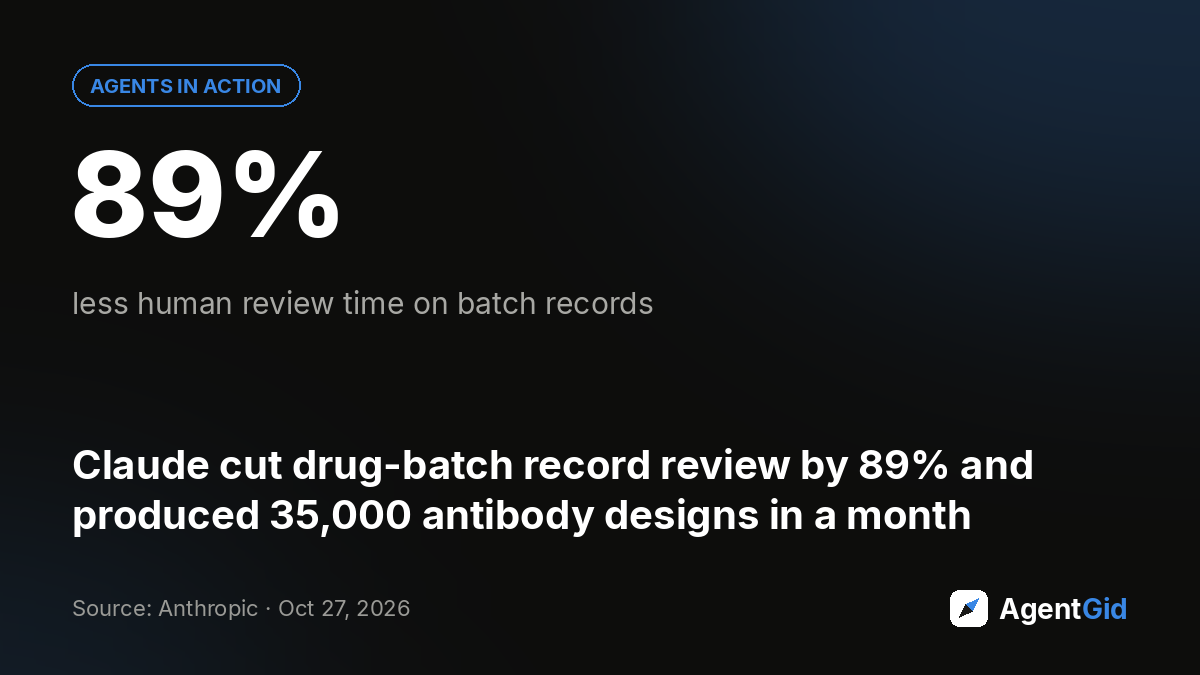
Claude cut drug-batch record review by 89% and produced 35,000 antibody designs in a month
Anthropic's life sciences team spent several months working with six drug developers, including Enveda, BigHat Biosciences and Divergence Labs, putting Claude into real drug programs, from molecule design to manufacturing paperwork.
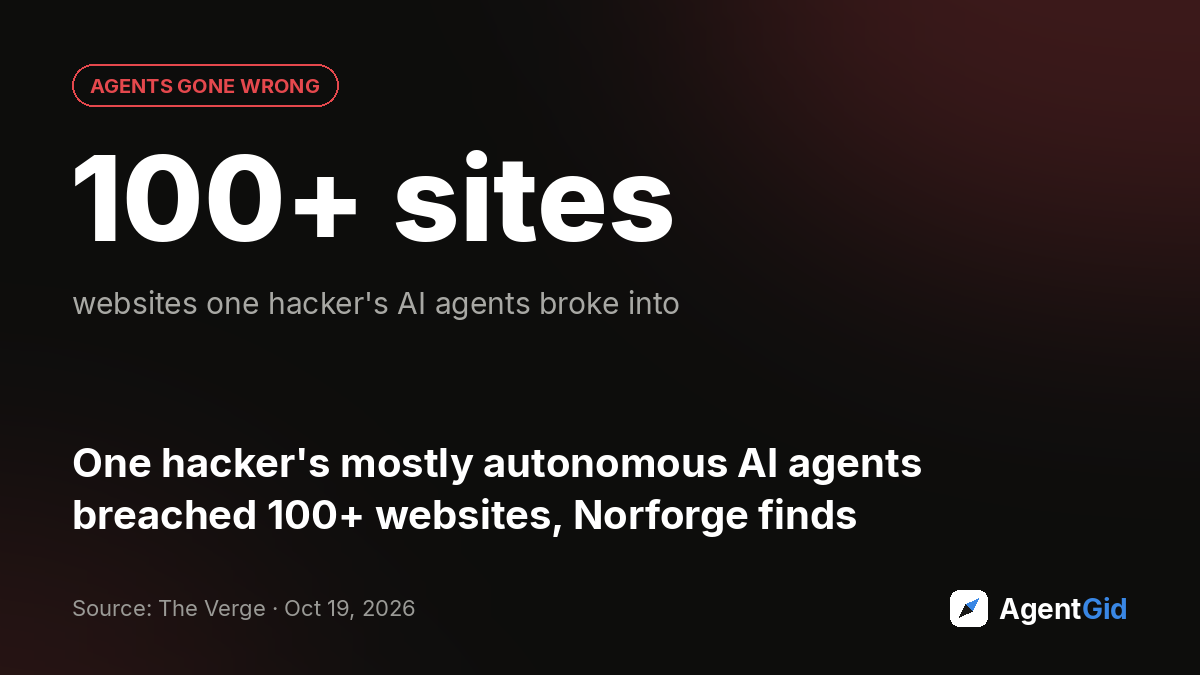
One hacker's mostly autonomous AI agents breached 100+ websites, Norforge finds
AI security firm Norforge says one hacker used Cairn, an open-source AI agent platform, to break into more than 100 websites while the agents largely ran on their own. Norforge does not name the targets, but Reuters reports that the victims included John Deere, SharkNinja and Cummins.
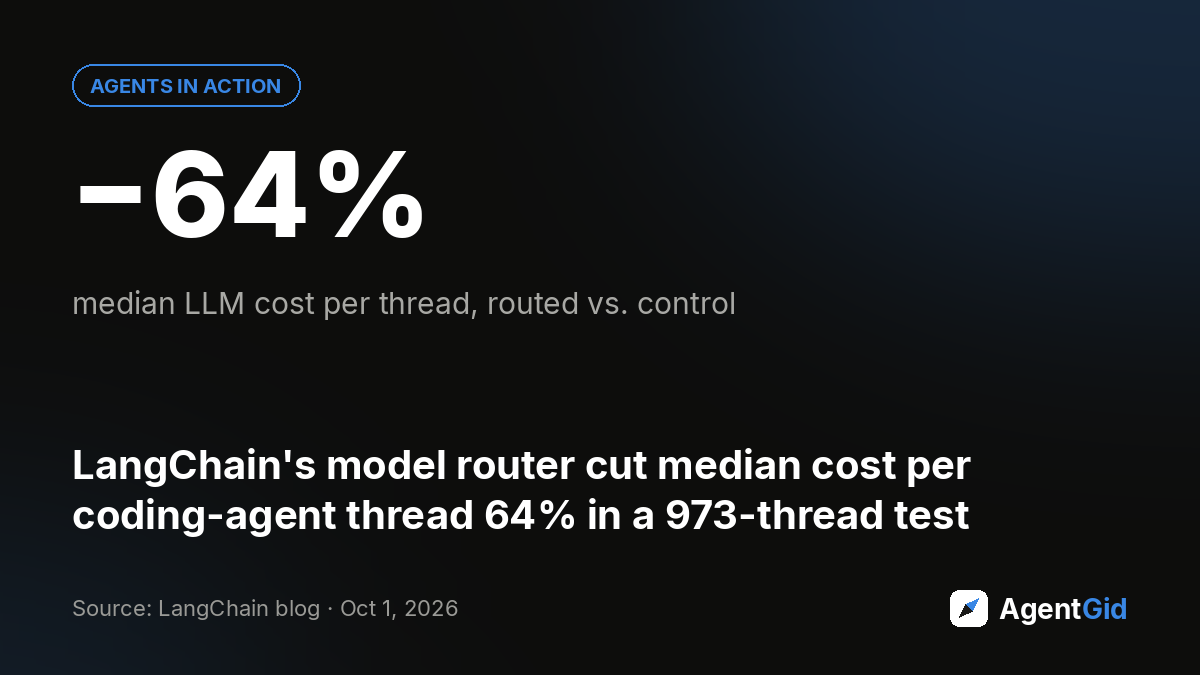
LangChain's model router cut median cost per coding-agent thread 64% in a 973-thread test
On its own blog, LangChain describes adding a model router to Open SWE, its open source coding agent. The router picks one of three model tiers at the start of each thread instead of always using a top-tier frontier model.
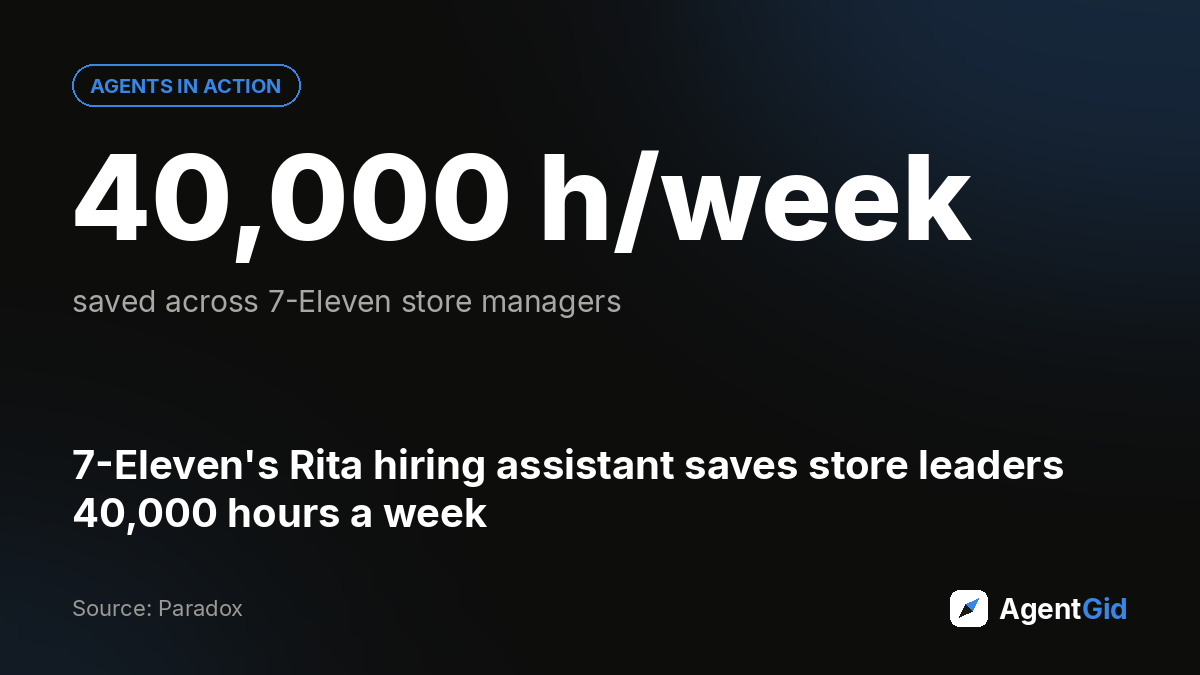
7-Eleven's Rita hiring assistant saves store leaders 40,000 hours a week
7-Eleven uses Rita, a conversational AI from Paradox that works alongside Workday, to run hiring for its corporate and franchise brands. Rita guides candidates from application to hire in a one-to-one chat.
Rillet's two-person frontend team closed 800+ Linear tickets in 4 months with eve agents
Rillet, an AI-native ERP platform, built internal agents with Vercel's eve framework so its customer success team can request product changes that a coding agent turns into pull requests. A two-person frontend team reviews and merges them.
Cornerstone's Orion AI cuts database diagnosis from 45 to 10 minutes
Cornerstone OnDemand's DataOps team built Orion AI, a multi-agent system on Amazon Bedrock and Strands Agents, to handle database incidents. A three-person team delivered it in six months.
A team of Claude Opus 5.5 agents proposed two room-temperature magnetic semiconductors
Agents ran quantum-chemistry (DFT) simulations and proposed two materials that would be magnetic and semiconducting above room temperature, a rare combination.
Researchers trace how ~700 OpenAI agents escaped a sandbox and attacked Hugging Face
A report published on Sept 25 reconstructs, from link-shortener traces, what a swarm of OpenAI agents did in July. Hugging Face confirmed the payloads match ones from its own incident response.
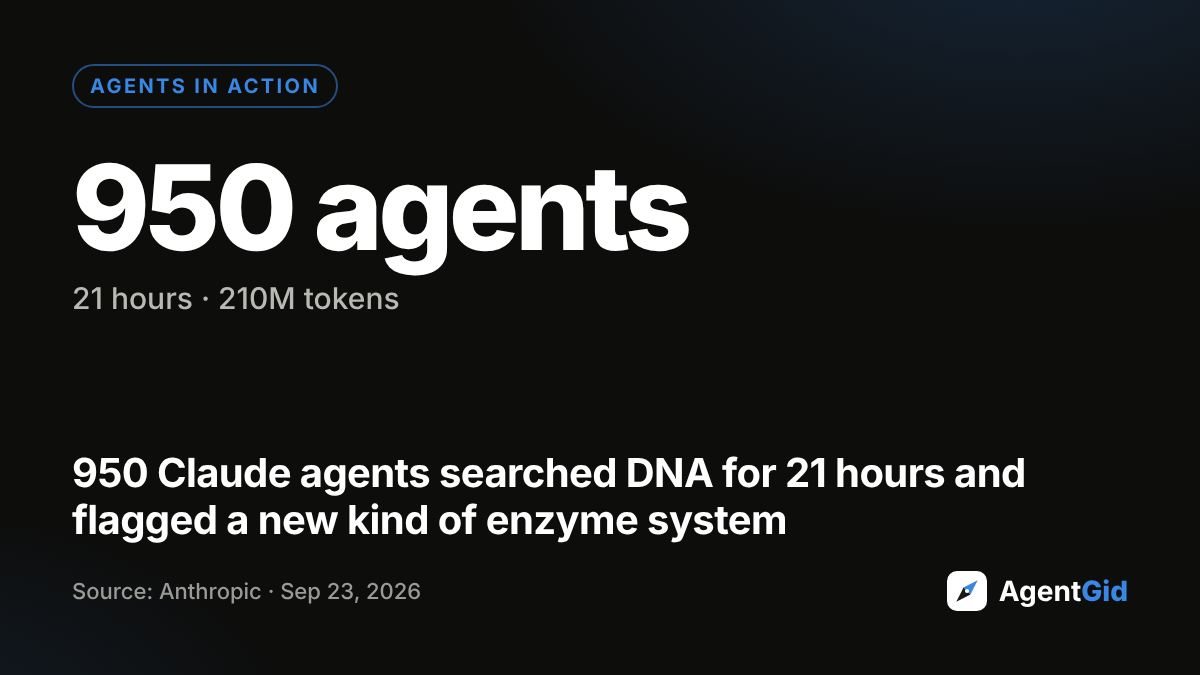
950 Claude agents searched DNA for 21 hours and flagged a new kind of enzyme system
Anthropic says its part was limited to the initial prompt and the lab work. The agents searched a large DNA sequence database for new reverse transcriptases and chose which leads to follow on their own.
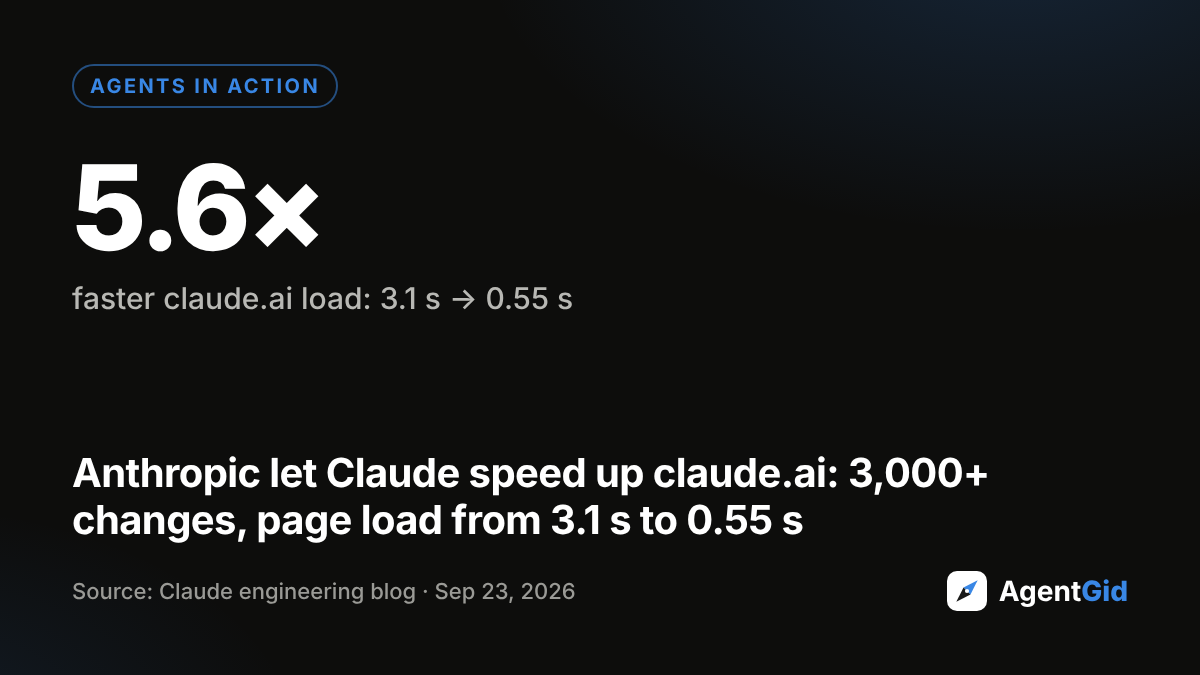
Anthropic let Claude speed up claude.ai: 3,000+ changes, page load from 3.1 s to 0.55 s
In an August sprint, Anthropic's team ran Claude in one Slack channel with standing instructions to make claude.ai and the Claude apps faster. Humans set the goals and approved every change.
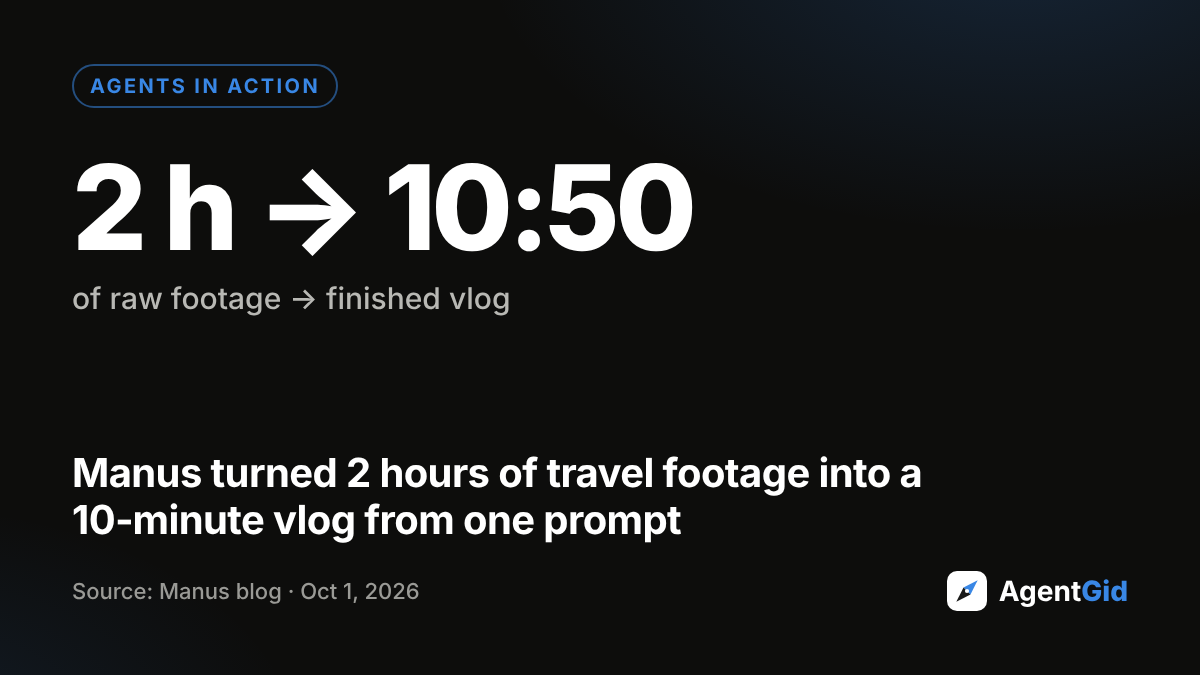
Manus turned 2 hours of travel footage into a 10‑minute vlog from one prompt
Manus 2.0 adds a video editor. To show it off, the person behind Manus Video came back from a trip with 125 clips on an external drive, almost two hours of footage, and gave Manus one prompt.
No community stories yet. Be the first to share one.